


When competing once per week, your training week (microcycle) must balance development and freshness. This article is a practical guide to how often each physical quality should be trained, and when it should be placed in the week.
A Practical Guide for Athletes Competing Once Per Week
In-season training isn’t about doing more.
It’s about doing the right work, at the right time, in the right dose - so you can improve without compromising match-day performance.
When competing once per week, your training week (microcycle) must balance development and freshness. Below is a practical guide to how often each physical quality should be trained, and when it should be placed in the week.
This guidance is informed by applied research in elite team sport environments.
Understanding Match Day Terminology (MD)
Throughout this guide, you’ll see references such as:
- MD = Match Day
- MD-1 = One day before the match
- MD-2 = Two days before the match
- MD-3 = Three days before the match
- MD+1 = One day after the match
For example, if your match is on a Saturday:
- Wednesday is MD-3
- Friday is MD-1
- Sunday is MD+1
Using both MD- (before match) and MD+ (after match) terminology allows training to be anchored either to the previous match or the upcoming fixture - which is how elite environments plan their microcycles.
The guidance below assumes a single-match week but includes applied flexibility where appropriate.
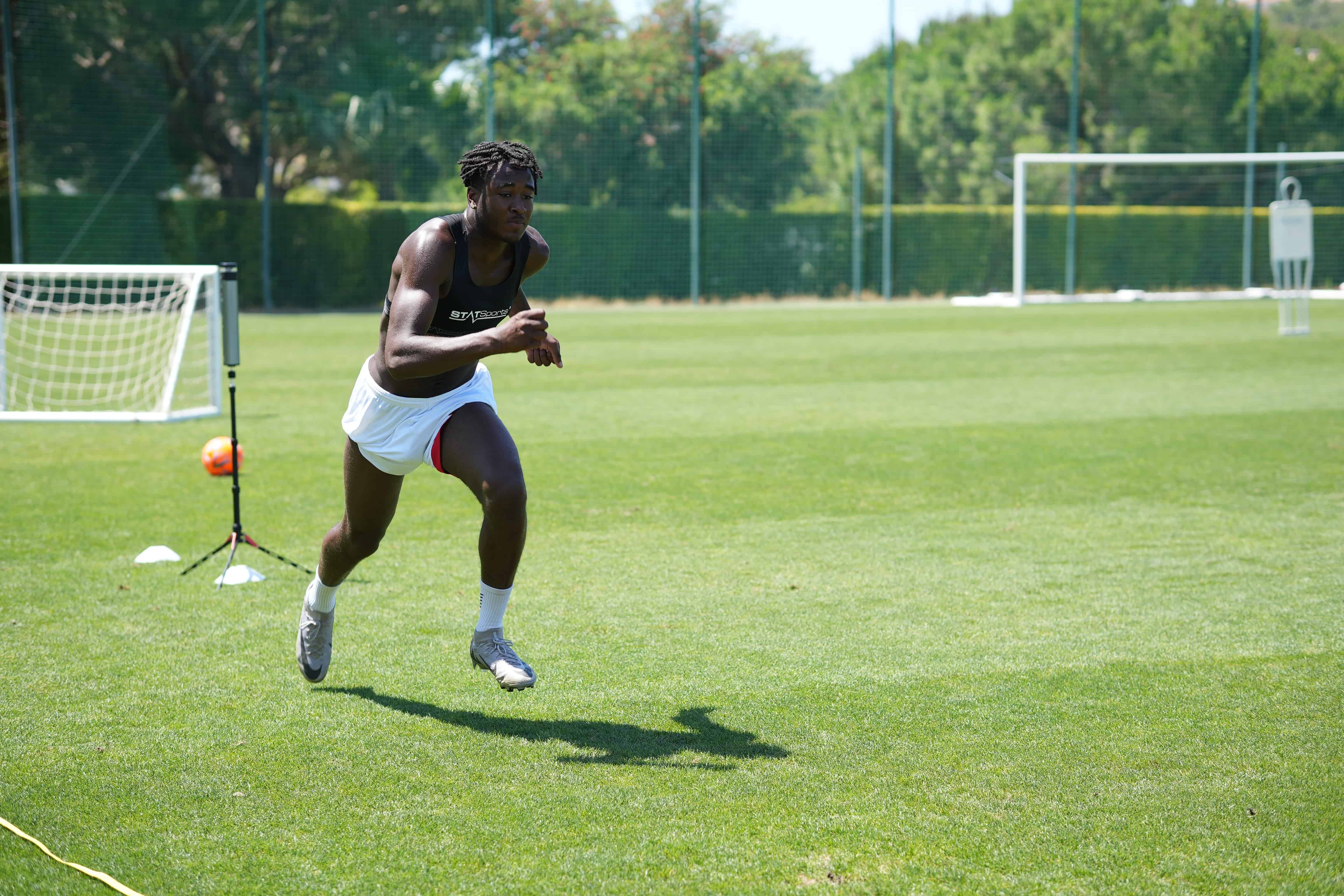
Speed
Speed is a quality that fades quickly if not exposed regularly.
How Often?
At least once per week.
Ideally twice per week, depending on context.
Research consistently shows that weekly sprint exposure is essential for maintaining sprint performance and reducing injury risk. Two exposures may enhance adaptation - but must be balanced with overall load and sport demands.
When?
High-dose sprint work should typically be placed no closer than 72 hours before the next match (MD-3 or earlier), particularly if volumes are high relative to the athlete’s chronic exposure.
Low-volume sprint “primer” work can be used on MD-1 or even MD, provided volume and eccentric stress are minimal.
Key principle:
Expose weekly. Place high load early. Prime lightly before competition.
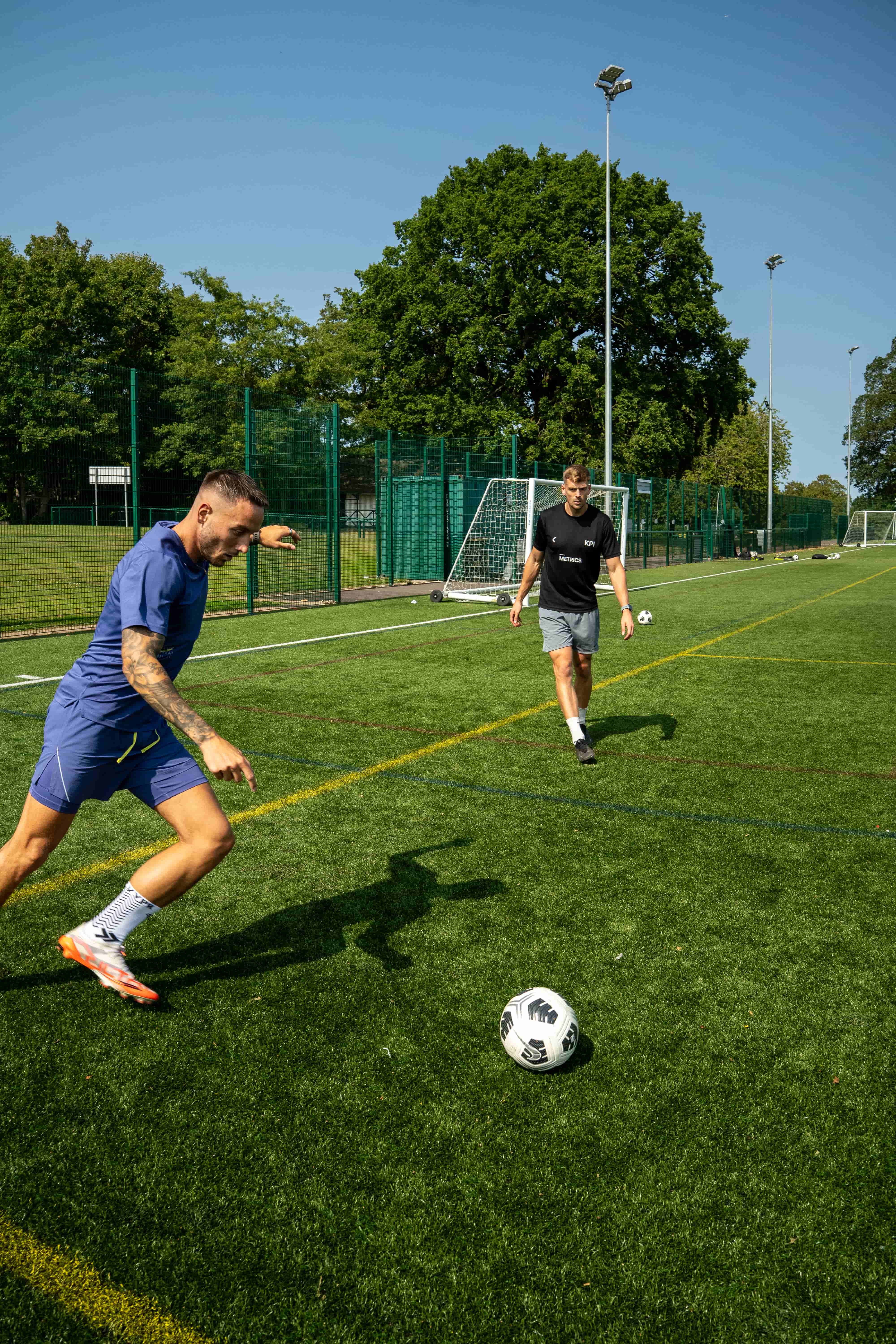
Change of Direction / Agility
Change of direction (COD) occurs frequently in sport, but high-intensity deceleration work requires careful placement.
How Often?
At least once per week at maximal intensity.
Although athletes change direction daily in practice, focused high-intensity deceleration exposure is necessary to maintain tissue tolerance and performance.
When?
Place high eccentric deceleration sessions no closer than 72 hours before the next match (MD-3 or earlier).
Research shows neuromuscular fatigue and muscle damage from intense eccentric loading can impair performance for up to 72 hours.
Key principle:
Train deceleration hard early in the week. Reduce eccentric load as match day approaches.
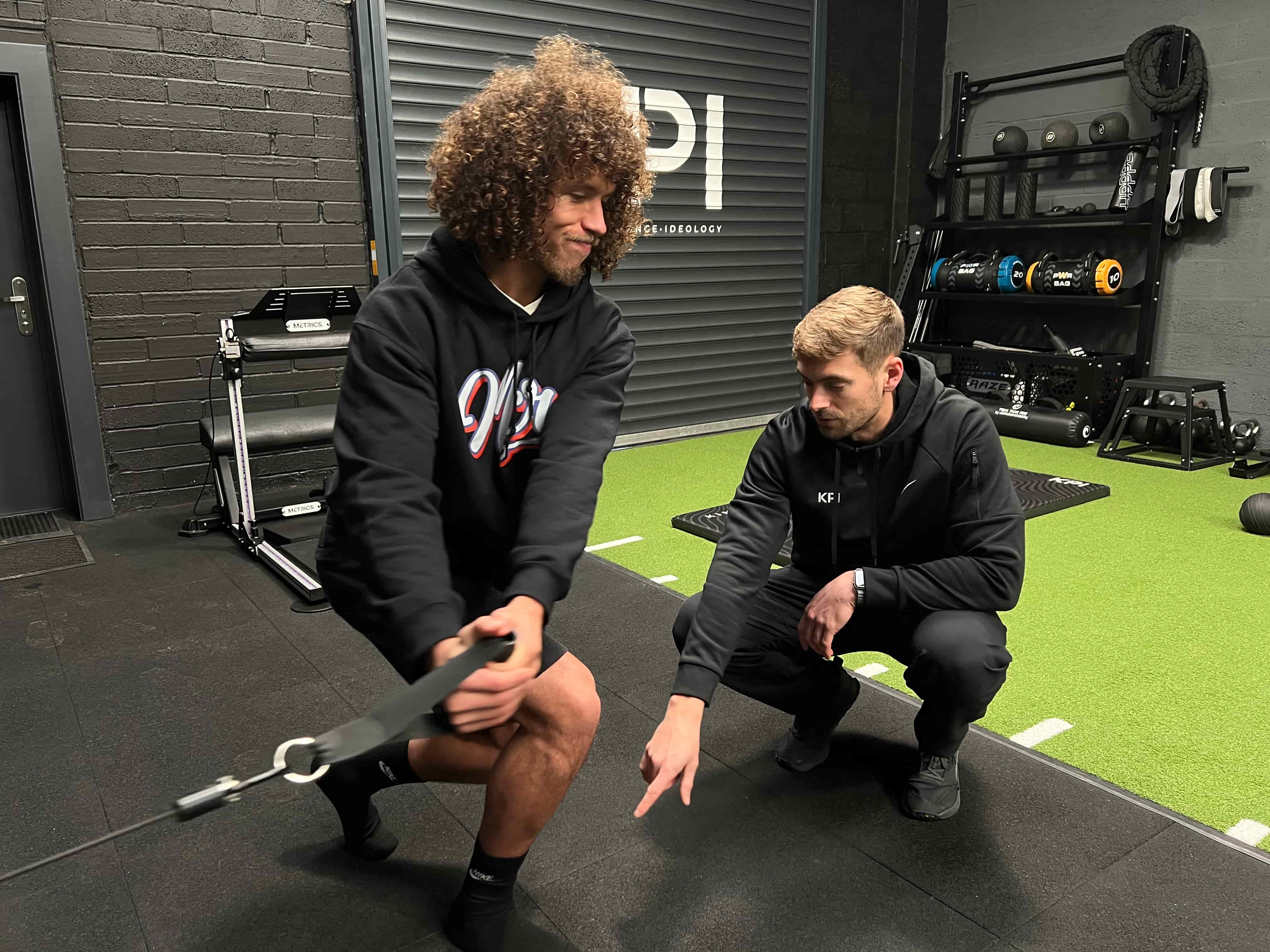
Strength
Strength underpins performance and resilience. In-season, the goal shifts from building to maintaining - unless carefully progressed.
How Often?
- One session per week can maintain strength - if a sufficient base was built in pre-season.
- Two sessions per week may be required to improve strength in-season, often via microdosing (shorter, focused exposures rather than large, fatiguing sessions).
When?
Traditionally, strength is placed as far from the next match as possible - often MD-3 or MD-4 in a single-match week.
However, in applied environments, strength can also be placed:
- On MD (post-match)
- On MD+1
This is particularly relevant when:
- Two strength doses are required
- Fixture congestion alters the week structure
- The post-match day still allows at least 72 hours before the next fixture
Key principle:
Maintain with one dose. Improve with intelligent frequency. Respect recovery windows.

Power
Power training overlaps with both speed and strength but carries slightly different fatigue characteristics.
How Often?
Two to three exposures per week at high intent and controlled volume.
In-season power work should follow a “little and often” model - focusing on neural sharpness rather than heavy fatigue.
Power can be integrated alongside strength work (contrast training) or technical movement sessions.
When?
Higher-dose power sessions should sit early in the week - ideally MD-3 or earlier.
Smaller “priming” doses with low eccentric load may be placed closer to competition (within 48 hours of the next match), provided volume is tightly controlled.
Key principle:
Maintain explosiveness through intent, not exhaustion.
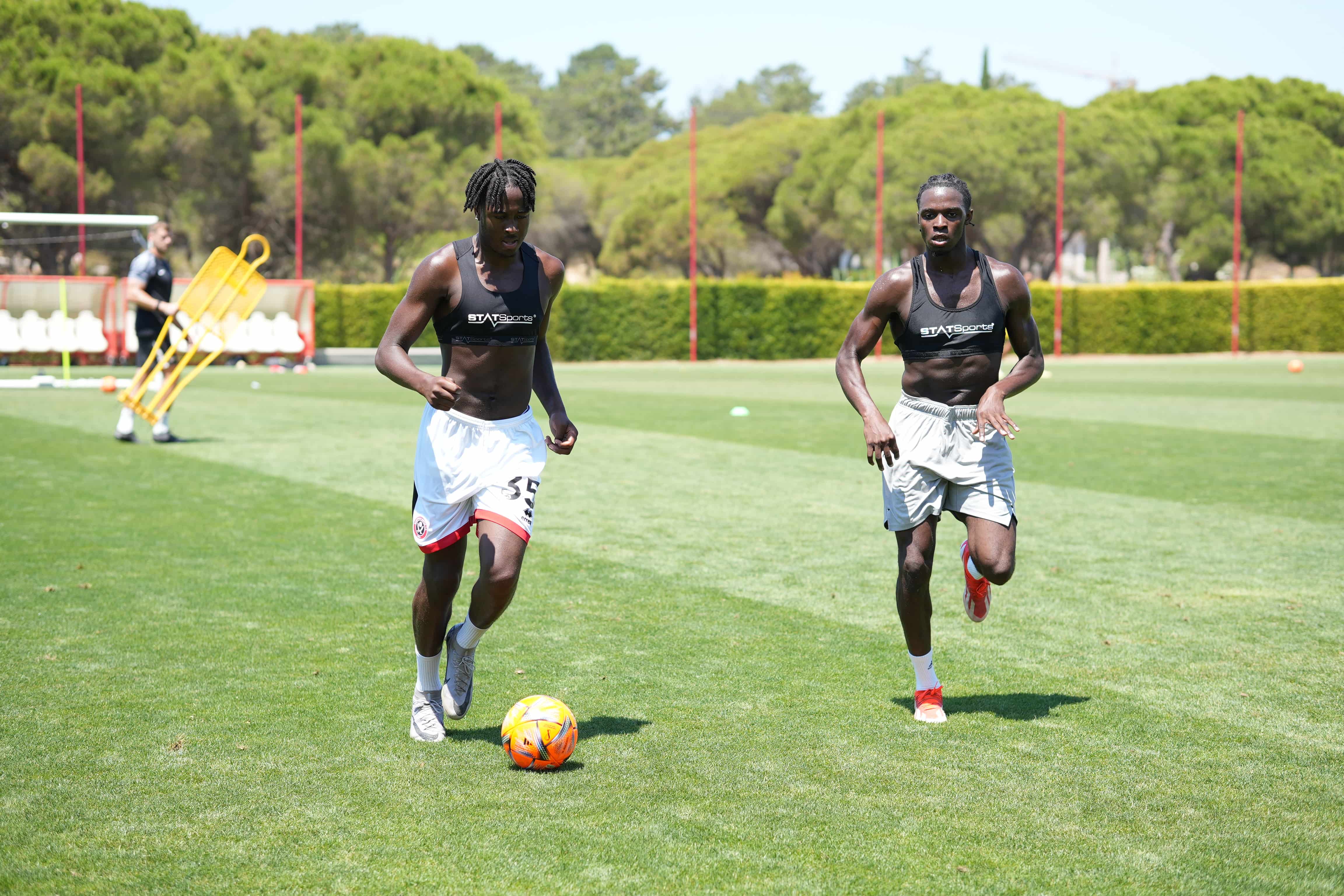
Cardiovascular Conditioning
In most team sports, match play provides the highest cardiovascular load of the week.
How Often?
Recovery from high cardiovascular load typically requires up to 72 hours.
Two conditioning exposures per week are possible, but necessity depends on:
- Sport demands
- Player role and minutes played
- Current fitness level
When?
High-intensity anaerobic conditioning should be placed no closer than 42–72 hours before a match.
Lower-intensity aerobic work can be distributed more flexibly throughout the week and may even support recovery on MD+1.
Cardiovascular load should generally be lowest on MD-1 and MD+1, when recovery and tactical clarity are prioritised.
Key principle:
The match is the largest stimulus. Training should support it - not compete with it.
Example Microcycle (Single Match Week – Saturday Fixture)
- Saturday (MD) – Match
- Sunday (MD+1) – Recovery, light aerobic work, possible micro strength
- Monday (MD+2) – Controlled reintroduction
- Tuesday (MD-4) – Strength + high-speed exposure
- Wednesday (MD-3) – Speed + high-intensity COD
- Thursday (MD-2) – Reduced volume, tactical emphasis
- Friday (MD-1) – Primer work only
- Saturday (MD) – Performance
This structure may shift depending on fixture timing, but the principles remain constant.
Why Timing Matters
Research consistently shows that neuromuscular fatigue and muscle damage following competition can impair sprint, change-of-direction, and strength performance for up to 72 hours post-match.
Misplacing high-load sessions increases injury risk and reduces match readiness.
Smart microcycle planning manages exposure rather than chasing fatigue.
Final Takeaway
In-season training is not about chasing soreness.
It’s about managing stimulus.
- Speed must be exposed weekly.
- Deceleration must be trained deliberately.
- Strength must be maintained intelligently.
- Power should stay sharp.
- Conditioning must respect recovery timelines.
What you train matters.
When you train it matters just as much.
This is how KPI approaches in-season development - performance first, fatigue managed, progression sustained.
Research & Applied Foundations
The guidance within this article is informed by current research and applied practice in elite team sport environments, particularly football and field-based sports. Key references include:
Recovery & Post-Match Fatigue
- Nédélec, M., McCall, A., Carling, C., Legall, F., Berthoin, S., & Dupont, G. (2012). Recovery in Soccer: Part I—Post-Match Fatigue and Time Course of Recovery. Sports Medicine. PMID: 23046224.
- Brownstein, C. G., et al. (2017). Etiology and Recovery of Neuromuscular Fatigue following Competitive Soccer Match-Play. Frontiers in Physiology.
- Drayton, A. M., Hamad, M. J., & Spyrou, K. (2025). The Time Course of Postmatch Physical Impairments in Professional Soccer: A Systematic Review. Journal of Strength and Conditioning Research.
Microcycle Structure & Load Management
- Martín-García, A., et al. (2018). Quantification of a Professional Football Team’s External Load Using a Microcycle Structure. Journal of Strength and Conditioning Research.
- Buchheit, M. (2024). Microcycle Periodization in Elite Football. Sports Performance & Science Reports (SPSR), Issue 218.
- Dupont, G., et al. (2010). Effect of 2 Soccer Matches in a Week on Physical Performance and Injury Rate.American Journal of Sports Medicine. DOI: 10.1177/0363546510361236.
Speed Exposure & Injury Risk
- Malone, S., et al. (2017). High-speed running and sprinting as an injury risk factor in soccer. PMID: 28595870.
- Cuadrado-Peñafiel, V., et al. (2023). Microdosing Sprint Distribution as an Alternative to Achieve Better Sprint Performance in Field Hockey Players. PMID: 36679451.
Eccentric Load & Neuromuscular Fatigue
- Harrison, D. C., Doma, K., Rush, C., & Connor, J. D. (2024). Acute effects of exercise-induced muscle damage on sprint and change of direction performance: A systematic review and meta-analysis.
Strength Maintenance Dosing
- Bickel, C. S., Cross, J. M., & Bamman, M. M. (2011). Exercise dosing to retain resistance training adaptations in young and older adults. PMID: 21131862.
- Trappe, S., Williamson, D., & Godard, M. (2002). Maintenance of whole muscle strength and size following resistance training in older men. PMID: 11909878.
Training Load Differences & Squad Management
- Varjan, M., et al. (2023). Weekly Training Load Differences between Starting and Non-Starting Players. (Open access).


